Saturday, February 26, 2022

Happy Black History Month” Samuel Raymond Scottron”

 Man oh man I love my Facebook memories especially during Black History Month. This was a post from 2008! Now I know y’all’ve heard of the late great Ms. Lena Mary Calhoun Horne. But have y’all heard of her Great Paw Paw Samuel Raymond Scottron!!!? Well every time you pull your blinds open or closed,or look in a two sided mirror you have him to thank for it!!! We are such DOPE people frfr…we are history 365❤️πŸ–€πŸ’š! 


Samuel Raymond Scottron(February 1841 – October 14, 1908)was a prominent African-American inventor from Brooklyn, N.Y. who began his career as a barber. He was born in Philadelphia in 1841. He received his engineering degree from Cooper Union in 1878.


He was a community leader in New York, setting up organizations to promote racial harmony and fairness, as well as a public speaker and writer on race relations. He was a member of the Brooklyn board of education, and a leader in the Republican Party. He fought for the end of slavery in Cuba and Puerto Rico. He invented a special mirror bracket that allowed you to see yourself as others see you. He went on to receive four more patents.


Here are his inventions and patent numbers.

U.S. Patent 76,253 Improved Mirror, March 31, 1868

U.S. Patent 224,732 Adjustable Window Cornice, February 17, 1880

U.S. Patent 270,851 Cornice, January 16, 1883

U.S. Patent 349,525 Pole Tip, September 21, 1886

U.S. Patent 481,720 Curtain Rod, August 30, 1892

U.S. Patent 505,008 Supporting Bracket, September 12, 1893 


Samuel Scottron moved with his family to New York City when he was a child, where he completed grammar school. During the American Civil War, he was the sutler for the 3rd United States Colored Infantry and almost went bankrupt.


 To recoup his fortunes, he first operated grocery stores in Fernandina and Jacksonville, Florida, and then a barber shop in Springfield, Massachusetts. It was there that he developed and patented his first invention, the adjustable window cornice. Moving to Brooklyn, New York, he worked as a traveling salesman for an import-export business located in lower 


Manhattan while continuing to patent his inventions and, by the late 1880s, was able to support himself and his family by manufacturing the products derived from his patents. His company, the Scottron Manufacturing Company, was located at 98 Monroe Street in Brooklyn. He helped improve society through his anti-slavery efforts and his inventions.


Samuel Scottron married Anna Maria Willett, a native New Yorker, in 1863; they would have five children. Scottron was the maternal great-grandfather of Lena Horne.


https://campbellhousemuseum.wordpress.com/2017/02/27/the-mystery-of-samuel-r-scottron/

Friday, February 25, 2022

Happy Black History Month” Rebecca Lee Crumpler”

 We been representing Black Girl Magick before it became a catch phrase. We are History 365❤️πŸ–€πŸ’š!!! 


Rebecca Lee Crumpler challenged the prejudice that prevented African Americans from pursuing careers in medicine to became the first African American woman in the United States to earn an M.D. degree, a distinction formerly credited to Rebecca Cole. Although little has survived to tell the story of Crumpler's life, she has secured her place in the historical record with her book of medical advice for women and children, published in 1883.


Crumpler was born in 1831 in Delaware, to Absolum Davis and Matilda Webber. An aunt in Pennsylvania, who spent much of her time caring for sick neighbors and may have influenced her career choice, raised her. By 1852 she had moved to Charlestown, Massachusetts, where she worked as a nurse for the next eight years (because the first formal school for nursing only opened in 1873, she was able to perform such work without any formal training). In 1860, she was admitted to the New England Female Medical College. When she graduated in 1864, Crumpler was the first African American woman in the United States to earn an M.D. degree, and the only African American woman to graduate from the New England Female Medical College, which closed in 1873.


In her Book of Medical Discourses, published in 1883, she gives a brief summary of her career path: "It may be well to state here that, having been reared by a kind aunt in Pennsylvania, whose usefulness with the sick was continually sought, I early conceived a liking for, and sought every opportunity to relieve the sufferings of others. Later in life I devoted my time, when best I could, to nursing as a business, serving under different doctors for a period of eight years (from 1852 to 1860); most of the time at my adopted home in Charlestown, Middlesex County, Massachusetts. From these doctors I received letters commending me to the faculty of the New England Female Medical College, whence, four years afterward, I received the degree of doctress of medicine."


Dr. Crumpler practiced in Boston for a short while before moving to Richmond, Virginia, after the Civil War ended in 1865. Richmond, she felt, would be "a proper field for real missionary work, and one that would present ample opportunities to become acquainted with the diseases of women and children. During my stay there nearly every hour was improved in that sphere of labor. The last quarter of the year 1866, I was enabled . . . to have access each day to a very large number of the indigent, and others of different classes, in a population of over 30,000 colored." She joined other black physicians caring for freed slaves who would otherwise have had no access to medical care, working with the Freedmen's Bureau, and missionary and community groups, even though black physicians experienced intense racism working in the postwar South.


"At the close of my services in that city," she explained, "I returned to my former home, Boston, where I entered into the work with renewed vigor, practicing outside, and receiving children in the house for treatment; regardless, in a measure, of remuneration." She lived on Joy Street on Beacon Hill, then a mostly black neighborhood. By 1880 she had moved to Hyde Park, Massachusetts, and was no longer in active practice. Her 1883 book is based on journal notes she kept during her years of medical practice.


No photos or other images survive of Dr. Crumpler. The little we know about her comes from the introduction to her book, a remarkable mark of her achievements as a physician and medical writer in a time when very few African Americans were able to gain admittance to medical college, let alone publish. Her book is one of the very first medical publications by an African American.


Thursday, February 24, 2022

Black History Month “Thomas Jennings”


The next time you pick up your clothes at the dry cleaner, send a thank you to the memory of Thomas Jennings. Jennings invented a process called ‘dry scouring,’ a forerunner of modern dry cleaning. He patented the process in 1821, making him likely the first black person in America to receive a patent...we are Sunkissed history 365❤️πŸ–€πŸ’š..


Thomas L. Jennings was born on January 1st, 1791 to a free African-American family in New York City. He later married a woman named Elizabeth, who was born a slave in Delaware, 1798 and died March 5, 1873. Under New York's gradual abolition law of 1799, she was converted to the status of an indentured servant and was not eligible for full emancipation until 1827. It freed slave children born after July 4, 1799, but only after they had served “apprenticeships” of twenty-eight years for men and twenty-five for women (far longer than traditional apprenticeships,designed to teach a young person a craft), thus compensating owners for the future loss of their property.


Jennings was able to do this because he was born free in New York City. But for the great majority of black people in America before the Civil War, patents were unobtainable, as an enslaved person’s inventions legally belonged to his or her master. Jennings started out as an apprentice to a prominent New York tailor. Later, he opened what would become a large and successful clothing shop in Lower Manhattan. He secured a patent for his “dry scouring” method of removing dirt and grease from clothing in 1821, when he was 29 years old. An item in the New York Gazette from March 13 of that year announces Jennings’ success in patenting a method of “Dry Scouring Clothes, and Woolen Fabrics in general, so that they keep their original shape, and have the polish and appearance of new.”


But we’ll never know exactly what the scouring method involved. The patent is one of the so-called “X-patents,” a group of 10,000 or so patents issued by the U.S. Patent and Trademark Office between its creation in 1790 and 1836, when a fire began in Washington’s Blodget's Hotel, where the patents were being temporarily stored while a new facility was being built. There was a fire station next door to the facility, but it was winter and the firefighters’ leather hoses had cracked in the cold.


Before the fire, patents weren’t numbered, just catalogued by their name and issue date. After the fire, the Patent Office (as it was called then) began numbering patents. Any copies of the burned patents that were obtained from the inventors were given a number as well, ending in ‘X’ to mark them as part of the destroyed batch. As of 2004, about 2,800 of the X-patents have been recovered. Jennings’ is not one of them. Sluby writes that Jennings’ was so proud of his patent letter, which was signed by Secretary of State—and later president—John Quincy Adams, he hung it in a gilded frame over his bed. Much of his apparently substantial earnings from the invention went towards the fight for abolition. 


He would go on to found or support a number of charities and legal aid societies, as well as Freedom’s Journal, the first black-owned newspaper in America, and the influential Abyssinian Baptist Church in Harlem.

All of Jennings’ children were educated and became successful in their careers and prominent in the abolition movement. His daughter Elizabeth, a schoolteacher, rose to national attention in 1854 when she boarded a whites-only horse-drawn streetcar in New York and refused to get off, hanging on to the window frame when the conductor tried to toss her out. A letter she wrote about the incident was published in several abolitionist papers, and her father hired a lawyer to fight the streetcar company. 


The case was successful; the judge ruled that it was unlawful to eject black people from public transportation so long as they were “sober, well behaved, and free from disease.” The lawyer was a young Chester A. Arthur, who would go on to become president in 1881. Though free black Americans like Jennings were free to patent their inventions, in practice obtaining a patent was difficult and expensive. Some black inventors hid their race to avoid discrimination, even though the language of patent law was officially color-blind. Others “used their white partners as proxies,” writes Brian L. Frye, a professor at the University of Kentucky’s College of Law, in his article Invention of a Slave. This makes it difficult to know how many African-Americans were actually involved in early patents. If a white person infringed on a black inventor’s patent, it would have been difficult to fight back, says Petra Moser, a professor of economics at New York University’s Stern School of Business.


“If the legal system was biased against black inventors, they wouldn’t have been able to defend their patents,” she says. The white infringer would have been believed. “Also, you need capital to defend your patent, and black inventors generally had less access to capital.”

It’s likely that some slave owners secretly patented their slaves’ inventions, Frye writes. At least two slave owners applied for patents for their slaves’ inventions, but were denied because no one could take the patent oath—the enslaved inventor was not eligible to hold a patent, and the owner was not the inventor.

Monday, February 21, 2022

Black History Month Shadrach Minkins

 Omg this is one of the dopest stories I’ve ever read. I’ve seen the picture over the years of the man in the chains and the one walking as it escaping,however I never knew the story behind the pictures. Until a couple weeks ago when my sister asked me had I heard of


Shadrach Minkins and his story. I had heard the name but that was about it. Sooo of course I had to start digging. Lol I’ve been reading everything I can find every since. So if you’ve never heard of Shadrach Minkins here ya go! 

#History

#WeHave2

#TeachOur

#Youth

#YaWont

#FindThis

#InYour

#SchoolsCurriculum 


Born into slavery in Norfolk, Virginia(the actual year is uncertain), Shadrach Minkins spent the first thirty years of his life in his hometown, but in May of 1850 he decided to run for freedom and escaped to Boston, where he became a waiter. https://en.m.wikipedia.org/wiki/Shadrach_Minkins


At that time, about 2,500 blacks lived in Boston. Runaway slaves found refuge there with fellow runaways, and a population of active black and white abolitionists. Most slaves who reached Boston expected the strong anti-slavery community would protect them and that they would be able to hide or blend in without being recaptured. The other option for fugitives was to pass through Boston to another safe location using the Underground Railroad. https://www.nps.gov/articles/-rescued-from-the-fangs-of-the-slave-hunter-the-case-of-shadrach-minkins.htm


The Fugitive Slave Act, part of the Compromise of 1850, however, undermined Boston’s reputation as a save haven.  This law allowed slave owners, or their representatives, to reclaim runaway slaves, with proof of ownership, throughout the United States.  Slave-catching aka patterrollers, now carried the force of law which meant all law-enforcement agencies throughout the North were required to assist those seeking fugitives. Law enforcement officers were required to arrest and hold any suspected fugitives and assist their return to slaveholders.


On February 15, 1851, Minkins was captured by two Boston police officers while he worked at Taft’s Cornhill Coffee House. While he was being taken to the courthouse, word spread and hundreds of black and white abolitionists crowded into the courthouse. Renowned abolitionist lawyers Robert Morris, Richard Henry Dana, Jr., Ellis Gray Loring, and Samuel E. Sewall came to Minkins’ assistance, but under the Fugitive Slave Act, his seizure was legal.

As the crowd grew bigger, members of the anti-slavery Boston Vigilance Committee, led by black abolitionist Lewis Hayden, rushed through the courtroom, seizing Minkins from marshals holding him in custody.  Lewis then hid Minkins in Boston’s 


Beacon Hill neighborhood.

From there, Lewis guided Minkins to Cambridge where he followed the Underground Railroad to Montreal, Canada.  Minkins made a living first as a waiter and restaurant operator and later as a barber. He married about 1853 and had four children, settling in a community with fellow fugitive slaves from the United States.

The escape of Minkins prompted President Millard Fillmore to use federal troops to enforce the Fugitive Slave Act.  He also called on Boston authorities to prosecute those who had taken Minkins from the Boston courthouse.  Hayden and other participants were arrested but soon acquitted by sympathetic Boston juries.


The Minkins episode further exacerbated tensions between Southern slaveholders and Northern abolitionists and thus contributed to the coming Civil War.  After the war, many runaway slaves in Canada returned to the U.S. Minkins, however, remained and lived out his life there, dying in Montreal on December 13, 1875.


Tuesday, February 8, 2022

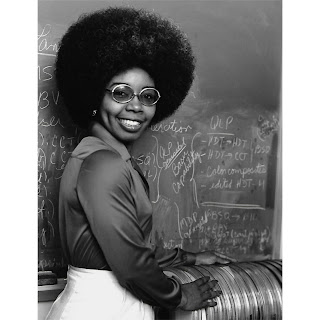
Black History Month” Valerie Thomas”

 We are History 365❤️πŸ–€πŸ’š!!! Today Masai's Fresh Garden Eats from Dirt to Dish/Holistic Living Made Easy and I are learning about Valerie Thomas! Ms Valerie was born in May of 1943, in Maryland. She showed interest in technology but despite her fascination, she was never encouraged to pursue her interest. And although her father was also interested in electronics, he would not help young Valerie with projects. 


Determined to learn about science, eight-year-old Valerie checked out a book titled ‘The Boy’s First Book On Electronics’ and created science projects on her own. Thomas attended an all-girl high school which placed very little emphasis on math and science. Upon graduating from high school, Thomas became one of two women at the time to major in physics at Morgan State University.


 She excelled in her studies and once she graduated from Morgan State, she accepted a job as a data analyst with NASA. While working at NASA, Thomas proved to be a highly valuable employee. In the 1970s, she oversaw the development of the image-processing system for Landsat. Landsat was the first satellite capable of sending images from outer space back down to Earth. Thomas later developed the illusion transmitter for which she received the patent for in 1980. The illusion transmitter creates optical illusion images using two concave mirrors. The unique shape of the mirrors produces an image that appears real or 3D. This technology was later adopted by NASA and has been used in surgery and to make TV screens. Thomas continued working for NASA until she retired in 1995. 


She had held numerous positions with NASA, like Project Manager of the Space Physics Analysis Network which allowed her to contribute immensely to space exploration. Thomas’ inventions improved the way we study space. She created a computer program that allowed scientists to study Halley’s Comet, the ozone layer, satellites, etc. Thomas has received a number of awards, including the Goddard Space Flight Center Award. She also mentored youth who were interested in math and science, teaching a new generation of scientists. https://urbanintellectuals.com/valerie-thomas-hidden-figure/

Black History Month” Sam Greenlee”

If you have never heard Sam Greenlee? Yooo then ya need to from under ya rock and google him!!! His book “The Spook Who Set by the Door literally help mood and shape many of my views. Yes indeed we ain’t new to this...get your literary   


game upπŸ˜‰!!! 


Sam Greenlee was born in Chicago,Illinois to an African-American family. His parents were singer and dancer Desoree Alexander and railroad man and union activist Samuel Greenlee. He grew up in west Woodlawn.


He attended Englewood High School, and in 1948 won a track scholarship to the University of Wisconsin, graduating in 1952 with a BS degree in political science. He was a member of Kappa Alpha Psi fraternity (Beta Omicron 1950). He served in the United States Army from 1952 to 1954, earning the rank of first lieutenant, and from 1954 to 1957 did graduate studies in international relations at the University of Chicago.


The author, Sam Greenlee, was told by Aubrey Lewis (1935–2001), one of the first black FBI agents recruited to the Bureau in 1962,that The Spook Who Sat by the Door was required reading at the FBI Academy in Quantico, Virginia.Having been much rejected by mainstream publishers, Greenlee spy novel first was published by Allison & Busby in the UK in March 1969, after the author met Margaret Busby in London the previous year,and by the Richard W. Baron Publishing Company, in the US. It was subsequently translated into several languages, including French, Italian, Dutch, Japanese, Finnish, Swedish, and German. The cinematic adaptation, also called The Spook Who Sat by the Door (1973), was directed by Ivan Dixon, and the novel's author co-wrote the screenplay.


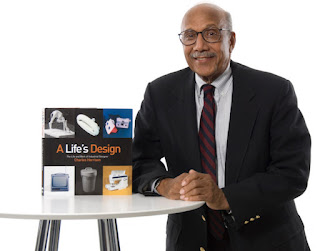
Black History Month” Charles Harrison”

 If you’re ever shaved,taken out the trash,set up the dryer,or played with the view master as a child you have Charles Harrison to thank for it! We absolutely loved learning about his and his inventions. It hit home for me personally as a person who is also dyslexia,and hasn’t let Society dictate what I can and can’t do! Salute and thank you for all you contribution. We are the fabric of history…Black History 365❤️πŸ–€πŸ’š! 


Charles Harrison born September 23, 1931,Shreveport Louisiana and died November 29, 2018. Mr. Harrison was an African American industrial designer whose creations included such iconic consumer items as polypropylene trash cans (including those with wheels) and the plastic version of the 3-D View-Master photographic slide viewer. 


In 2008 the Smithsonian’s Cooper-Hewitt National Design Museum gave Harrison—one of the few early African American industrial designers—a Lifetime Achievement Award “in recognition of an individual who has made a profound, long-term contribution to contemporary design practice.” Harrison’s father was a university professor of industrial arts, and the youngster grew up in Louisiana; Prairie View, Texas; and Phoenix Arizona. When he was 16, his elder brother helped him to attend the City College of San Francisco, where for the first time in his life he was in class with white students. 


Despite struggling with dyslexia Harrison earned an associate’s degree and decided to pursue a career in industrial design. This decision took him in 1949 to Chi’Town where he studied with Henry Glass at the School of the Art Institute and earned a BFA (1954). He later received a Masters degree(1963) in art education from the Illinois Institute of Technology’s Institute of Design. 


After completing his military service as a cartographer, Harrison returned to Chicago, where he found a few temporary design jobs and worked for Sears on a freelance basis. It was during this period that he modified the View-Master into a plastic toy suitable for use by children. In 1961 Sears discarded its unwritten policy against employing African Americans, and Harrison was formally hired. He remained with Sears for 32 years, ultimately leading the firm’s design team.


In an era when aesthetic utility, and cost-effectiveness were in unusual balance, Harrison created a variety of practical domestic goods. Among the more than 700 products that he developed were such items as baby crips,portable hair dryers, hedge clippers, sewing machines of varying complexity,steam irons,riding lawn mowers, shoe buffers, portable turntables blenders, circular fluorescent lightbulbs, electric frying pans, consumer power tools, coffee percolators,fondue pots,toasters, stoves,hearing aids,band saws, wheelbarrows, and cordless electric shavers https://youtu.be/CfkY3gVZfsE

.